Beating the Heat: Smart Investment Options in Kenya as Inflation Hits a 2-Year High
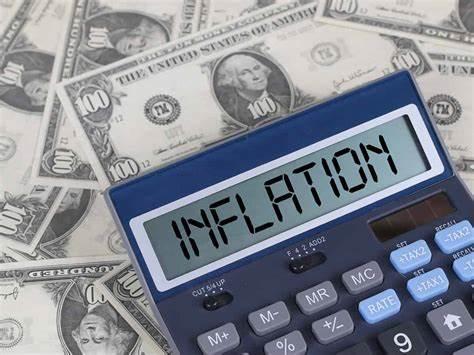
Kenya's inflation hit 6.7% in May 2026 — the highest in over two years — driven by fuel price hikes that pushed transport costs up 16.5%, food prices up 9.4%, and housing utilities up 3.4%. For the ordinary Kenyan, this is felt at the pump, in the supermarket, and in the rent. For the informed investor, it is a call to action.
Any money earning less than 6.7% annually is silently losing value. The goal is simple: put your capital where it beats inflation.
The Business Exodus: A Warning Sign
The same forces driving inflation are pushing businesses out of Kenya. The Registrar of Companies announced 742 companies set for dissolution in 2025 alone. High-profile exits include:
- Procter & Gamble — closed its Nairobi office, making ~850 employees redundant, citing unsustainable costs
- CMC Motors — ended 40 years of operations in Kenya, Tanzania, and Uganda due to economic pressures and currency depreciation
- D.T. Dobie — 75+ years in Kenya, now in liquidation
- Kansai Plascon — the paint manufacturer exited through voluntary liquidation
- Foschini Group — the fashion retailer left in April 2024 citing high operational costs
- Copia Kenya — e-commerce platform shut down in six towns after going into administration
- Hashi Energy — collapsed under a KSh 5 billion debt
- Bank Al-Habib — Pakistani bank cancelled its Kenya licence in May 2025
- Ukwala Supermarkets — liquidated with KSh 1 billion in debts against KSh 19 million in assets
Beyond closures, manufacturers are relocating to Tanzania, Uganda, and Rwanda, attracted by lower taxes and more predictable regulation. KEPSA warned of "capital flight," while COTU's Secretary-General confirmed: "Some investors are already relocating to neighbouring countries where they can be listened to."
The root causes: aggressive new taxation (including a 17.5% levy on steel and clinker imports), fuel price volatility, currency depreciation, and regulatory unpredictability.
What this means for real estate investors: Commercial office vacancies are rising as multinationals downsize. But affordable residential demand is growing — every displaced worker still needs a home. And raw land is entirely immune to corporate flight.
Where to Put Your Money in 2026
1. Real Estate — The Core Inflation Hedge ⭐⭐⭐⭐⭐
Real estate is Kenya's most reliable wealth-building vehicle, and inflation makes it stronger. Property values rise with construction costs. Rental income adjusts upward. Land is finite. Nairobi property has appreciated 300–500% since 2000, and rental yields currently average 6–10% annually — before factoring in capital growth.
Best locations in 2026: Syokimau, Ruiru, Juja, and Kitengela for entry-level value; Kilimani and Westlands for rental yields; coastal Nyali and Diani for tourism-driven returns.
Watch out for: Oversupply in premium Nairobi suburbs, off-plan developer fraud, and title deed scams — always verify via the Ardhisasa portal and engage a qualified advocate.
2. Land Banking — The Generational Wealth Strategy ⭐⭐⭐⭐⭐

Land banking — buying undeveloped land ahead of infrastructure and urbanisation, then holding — is Kenya's most powerful long-term investment strategy. No maintenance costs. No tenants. No depreciation. Just appreciation driven by population growth, urban sprawl, and infrastructure development.
Best land banking locations right now:
- Ruiru, Juja, Kamakis, Ruai — Nairobi's eastward expansion path. Strong demand from Thika Superhighway access, universities, and industrial zones. A Juja plot bought at Ksh 3.5M in 2024 is already worth Ksh 6M.
- Joska & Kamulu (Kangundo Road) — 45 minutes from Nairobi CBD along a dual carriageway that is actively transforming the corridor. Plots have risen from Ksh 200,000 to Ksh 600K–2.5M. Schools, hospitals, and amenities already in place. Affordable entry with a clear appreciation runway ahead.
- Kithyoko & Matuu (Thika–Garissa Highway, Machakos County) — Kenya's most affordable titled land in a growth corridor. Matuu plots from Ksh 180,000; Kithyoko from Ksh 200,000 — roughly 70% cheaper than Ngong or Juja. Plots that sold at Ksh 150,000 in 2020 are now Ksh 350,000+. Positioned on the path of the Greater Eastern Bypass and Konza developments. Ideal for chamas, SACCOs, and first-time investors. Target: 80–150% appreciation over 7–10 years.
- Limuru, Kikuyu, Karuri — Kiambu County's premium belt, drawing high-income buyers seeking cooler, greener living with city access.
- Nakuru and Naivasha — Nakuru's city status upgrade and SGR proximity are driving strong demand across the Rift Valley corridor.
- Kilifi, Watamu, Malindi hinterland — Affordable coastal entry ahead of tourism-driven interior appreciation.
- Laikipia and Trans Nzoia — Agricultural zones with long-term development potential and agri-income while you wait.
The golden rule: Buy before the infrastructure arrives. Once the road is tarmacked, the price has already moved. Verify title through Ardhisasa, work with EARB-registered agents, and think in a 5–15 year horizon.
3. Government Securities (T-Bills & Bonds) ⭐⭐⭐⭐
The 91-day Treasury Bill currently yields 15.5% per year with zero default risk — a real return of ~8.8% above inflation. Minimum investment: Ksh 50,000 via the CBK's DhowCSD platform. Treasury Bonds lock in these rates for longer periods.
Best use: Short-term capital parking and portfolio diversification alongside real estate. Not a wealth-builder on its own — when the T-Bill matures, you have cash; when land appreciates, you have an asset.
4. Money Market Funds (MMFs) ⭐⭐⭐
Top MMFs are yielding 9–12% annually with liquidity in 1–3 days and entry from as low as Ksh 1,000. Ideal for accumulating capital ahead of a land or property purchase, or maintaining an emergency buffer that still beats inflation.
5. NSE Stocks & REITs ⭐⭐⭐
Blue-chip dividend stocks (Safaricom, Equity Bank, KCB) and REITs (Real Estate Investment Trusts) offer market exposure. REITs are particularly worth noting — they provide real estate returns without direct ownership, are traded on the NSE, and pay quarterly income. Good for investors not yet ready to buy physical property.
6. SACCOs & Chamas ⭐⭐⭐
SACCOs offer savings rates of 6–8%, development loans at 12–14% (below bank rates), and dividends of up to 15% on share capital. More importantly, a good SACCO unlocks the development loan that turns banked land into a rental income-generating property. Chamas pool capital to access deals no individual member could alone.
7. Agribusiness ⭐⭐⭐
With food inflation at 9.4%, agriculture is undervalued as an investment. Leasing farmland to tenants, growing high-value export crops (avocados, macadamia), or investing in agritech generates returns. Combined with land banking, it creates a model where your land earns income while it appreciates.
Suggested Investment Allocation
| Asset Class | Allocation | Role |
|---|---|---|
| Land Banking & Real Estate | 50–60% | Core wealth & inflation hedge |
| Government Securities | 15–20% | Safe, liquid returns |
| Money Market Funds | 10–15% | Liquidity buffer |
| NSE / REITs | 5–10% | Diversification |
| SACCOs / Chamas | 5–10% | Capital pooling |
The Bottom Line
Kenya's inflation is rising. Businesses are closing. Capital is leaving. In this environment, paper assets — savings accounts, idle cash — are guaranteed wealth destroyers. The question is not whether to invest, but where.
Real estate and land banking have been the answer for Kenyan families for generations, and 2026 only strengthens that case. Kenya still faces a housing deficit of over 2 million units. Population growth continues. Infrastructure is expanding. Land remains finite.
The phrase holds: "Land never disappears."
Act strategically, verify everything, think long-term — and the inflation that is hurting so many Kenyans today becomes the very engine that grows your wealth tomorrow.
Related posts:
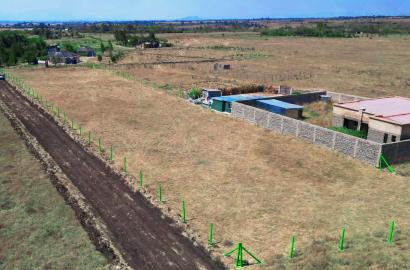
Before the rains destroy another dream, choose land that's already proven itself. Neema Gardens Phase 7, Joska — all-weather roads, water, electricity, ready title deeds, gated community, just Kes 650,000. Don't gamble your savings on land that floods. Secure a...
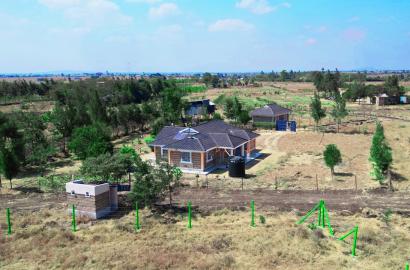
Still paying rent? That money is gone forever. Start your exit plan today — buy land first, build in stages, own your future. Joska Neema Gardens Phase 7 offers ready-to-settle 50x100 plots at Kes 650K, ready title, 49km from Nairobi...